
”“A day and a night in the life of a commissioner—you don’t stop thinking about it.” – David Bridge, Lead Water Commissioner

5:30 AM – The Day Begins
For Water Commissioners, David Bridge and Jean Lever, the day begins in the early morning, as dawn is barely touching the sky. The morning starts with a plan set the previous day and based around the questions:
- Who’s doing what with water?
- When do they need it?
- How much do they need?
- Will reservoir releases be required?
- Is non-native water needed?
8:00 AM – The Call
By 8:00 AM, “The Call” is set. This is the formal determination of who has the right to divert water that day, based on Priority and Administration (Admin) numbers.
Both are rooted in Colorado water law’s core principle: first in time, first in right. Admin numbers are calculated by combining a water right’s appropriation date (the earliest documented date of use) and its adjudication date (when a court formally decreed the right) into a single number — specifically, the number of days elapsed since December 31, 1849.
The lower the Admin number, the older — and more senior — the right.
To put it in practice, here are two calls made on the Poudre River on August 13, 2025:
- BH Eaton Ditch — Priority 11, Admin #5,275 (5,275 days from the baseline to June 10, 1864, the earliest date of use for Pleasant Valley Lake Canal)
- Lower Platte Beaver Ditch — Admin #13,985 (13,985 days from the baseline to April 15, 1888)
In a competition for water, BH Eaton Ditch wins — its rights are older.


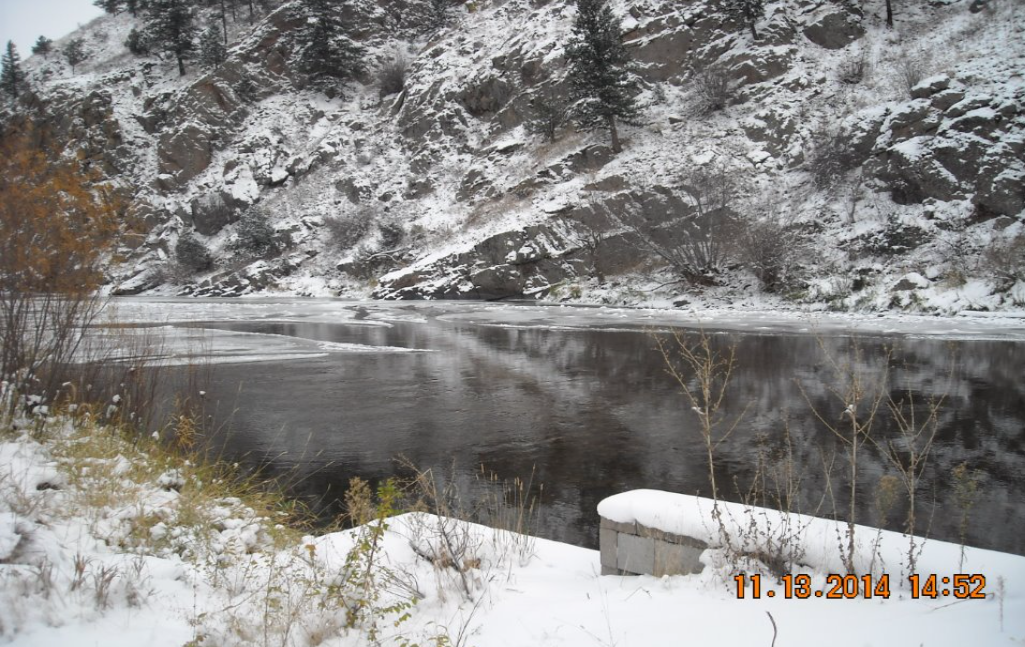
”“I dream about opening and closing headgates.” – David Bridge, Lead Water Commissioner
Afternoon – Watching the River
A water commissioner’s afternoon is anything but routine. As river conditions shift throughout the day, commissioners stay alert and adapt.
Water users are required to give at least 24–48 hours’ notice before starting, stopping, or changing how much water they’re diverting — but nature doesn’t always cooperate with that timeline.
Each week, commissioners physically visit headgates and other structures to verify that measurement devices are reading accurately and to collect data. When something’s off, they make corrections on the spot.
Throughout the day, they also field questions and complaints from both the public and water users, assessing whether each user’s operations line up with their decree requirements and what steps may be needed to bring things into compliance.
The Review – Making Sure Water Isn’t Wasted
Water is a precious resource in Colorado, and part of a commissioner’s job is making sure none of it goes to waste. When a user requests water, the commissioner reviews whether they’re in priority, whether they have an acceptable headgate, and whether their measuring device is accurate.
From there, the commissioner determines two things: Can the user get the water they’re asking for without triggering a formal call? And if a call is set, will curtailing upstream junior rights actually deliver the water the senior user needs?
It’s a balancing act — technical, legal, and deeply practical all at once.
Evening – Whenever the River Lets You Stop
Due to constantly changing river conditions, a water commissioner’s day often extends beyond working hours.
Most days wrap up in the late afternoon with calls to ditch riders and planning for the next day. But adjustments can come at any hour, depending on what the water is doing.

Q&A with David Bridge and Jean Lever

Q: How does a dry winter versus a wet winter affect water administration come spring?
A: “When the Poudre Basin experiences a less than average rate of precipitation during the Winter months, many factors need to be considered.
- Reservoir storage filling is focused on upper elevation reservoirs filling first (when possible), during dry years.
- Junior Reservoir Storage filling is prioritized during wet years.
- Above average winter snowpack will lead to longer periods of storage and direct use by water users.
- Below average winter snowpack will result in shorter periods of direct use and a more negative volume system change.”
Q: What is another way the seasons can affect water allocation?
A: “During mid-summer rainstorms, sudden runoffs can flush through the river system. As a result, irrigators may temporarily pull water off the river and store it until it can be used.”
Q: For students interested in a water commissioner career path, where do you recommend they begin?
A: “Bachelor of Science in Environmental and Natural Resource Economics”
Q: What are the top three skills you lean on as water commissioners?
A: “Understanding the needs of the water user, understanding the capabilities of the water system, and communication to the water user.”
Q: What is your favorite part of the job?
A: “I enjoy playing a critical role in the success of the local community.”
Q: What is the most difficult part of the job?
A: “The most difficult aspect of the job is understanding the capabilities of the water system.”
Q: What can water users do to make a commissioner’s job easier?
A: “I think the water users are doing just fine.”